Republicans are sorting through the election fallout with internal discussions turning to finding a way forward. There are a number of contributing factors to the loss, but if we had to identify the most important reason, it was the huge Republican losses among independent voters — nationally and in the states. Nationally, independents made up 33% of the electorate.
The trend chart below shows the historical vote trend among independents from 1984 forward. The current exit poll margin among independents is +22D. This is the largest margin among independents for either party in the history of exit polling.
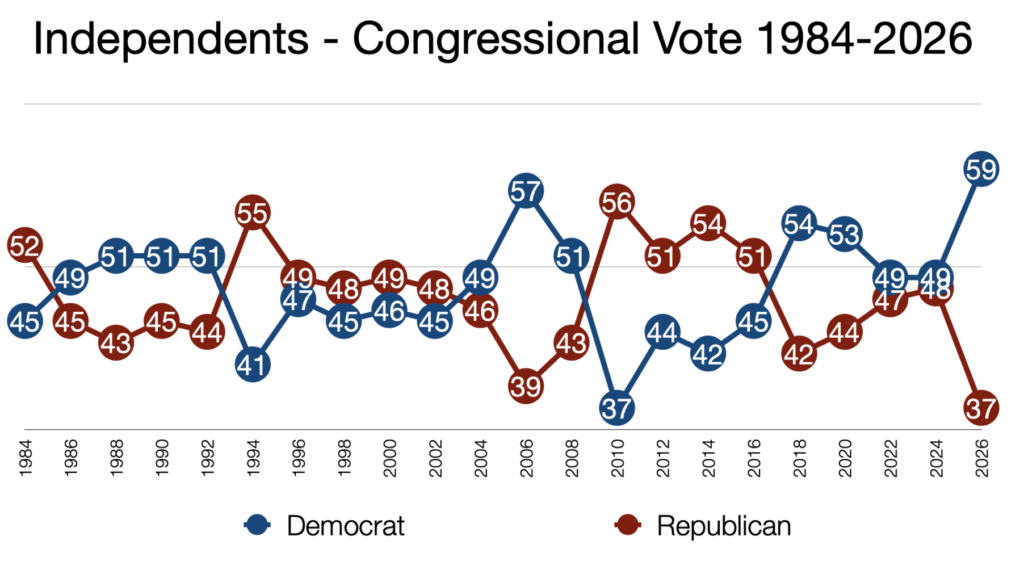
This margin exceeds the Democratic lead among independents in 2006 (+18D) and 2018 (+12D). The best Republican performance among independents was in 2010 (+19R).
As we highlighted last week, state exit polls (not all are final) are showing large Democratic leads among independents in the Senate races. Of the 13 competitive Senate states including South Carolina, Kansas and Mississippi, every one had Democrats over 50% among independents. In eight of these states, Democrats were over 60%. Six states show the independent margin over 30 points. This allowed many Democratic candidates to overcome significant Republican party ID advantages, Kansas (+17R), and South Carolina (+14R) as key examples. In his Fox interview with Bret Baier, Leader Thune was absolutely correct that “we’ve got to start talking to independent voters.”
Our new Discussion Points podcast episode Blue Wave Election Landslide: What Happened? covers our initial takeaways including the election’s biggest surprises. More election episodes are forthcoming. For more on the role independents played, see David’s latest Roll Call column, Independents decide the election, again!
Exit polls are close to final and we will be releasing a comprehensive post-election analysis very soon.